Peer support
Buddy and guide programmes via WhatsApp, social media groups, and online platforms — matching people with others who understand.
Our approach
From lived experience to peer support, community, and systemic change.
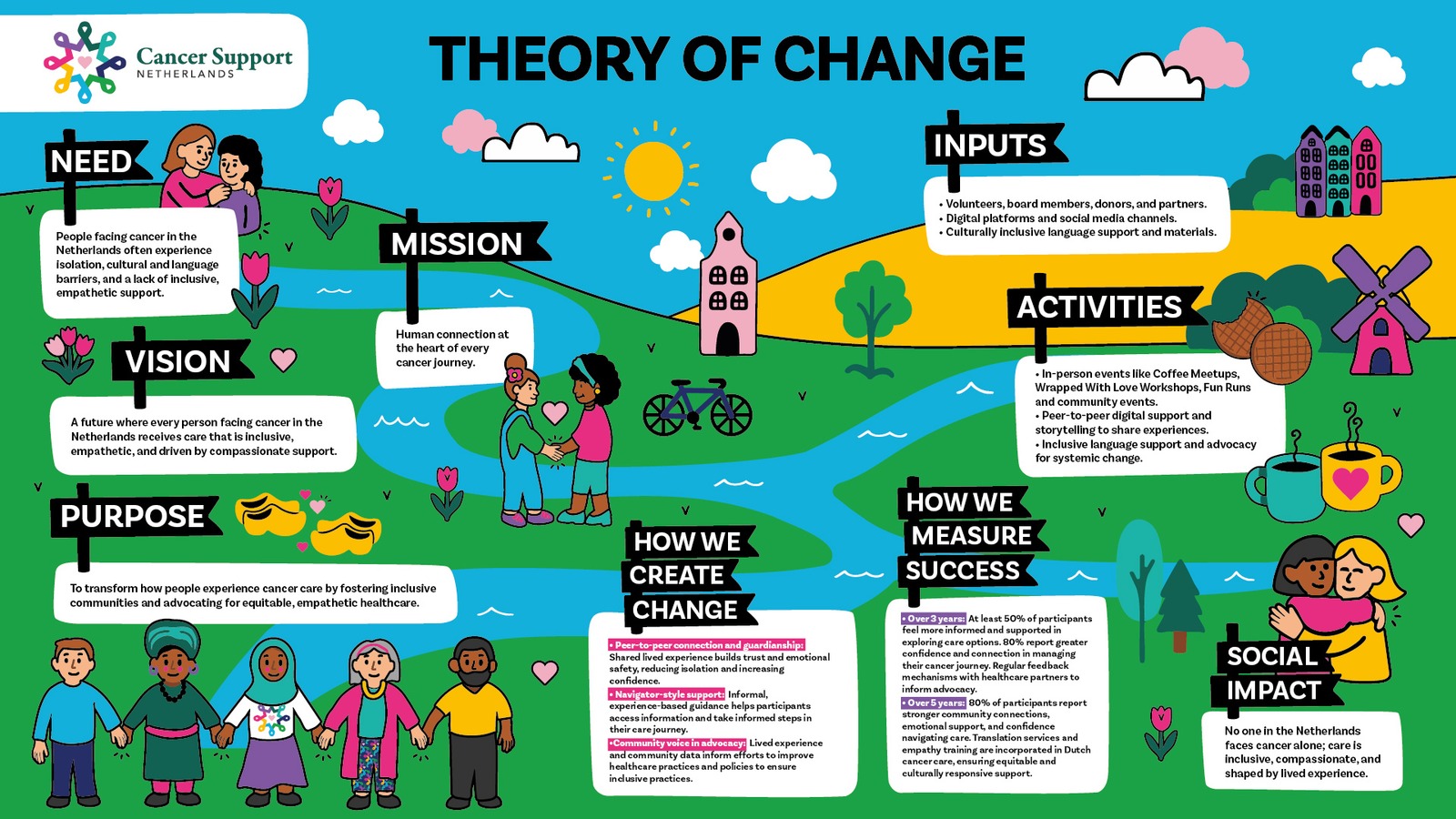
By shaping our work through the lived experiences of people affected by cancer — including those from diverse backgrounds — we provide peer-led support, build strong community connections, and advocate for a more inclusive and equitable healthcare system. Through this combined approach, we aim to improve individual wellbeing while driving systemic change.
Why a theory of change
A Theory of Change is how a non-profit explains — out loud, in writing — how its activities are supposed to lead to real-world impact. It is the link between what we do every week and the long-term change we hope to see: fewer people facing cancer in isolation, better support for non-Dutch speakers, and a healthcare system that is more inclusive by design.
For CSN, the starting point is always the same: the lived experience of people affected by cancer in the Netherlands — especially those who struggled to find care that fit their language, culture, or circumstances. Everything we build flows from listening to them first.
Three pillars
Buddy and guide programmes via WhatsApp, social media groups, and online platforms — matching people with others who understand.
Monthly meet-ups, speaker events, crafting circles, and multilingual resources that turn isolation into belonging.
Engagement with policymakers and healthcare institutions to promote inclusive care for non-Dutch nationals.
The flow
We start with the people we serve — their stories, their gaps in care, their ideas for what would have helped.
We translate what we hear into real programs: buddy matching, meet-ups, multilingual resources, events that connect.
We take those insights to policymakers, hospitals, and healthcare providers — pushing the system to match the people inside it.
We track what works, listen when it doesn't, and keep adjusting. The community shapes the theory — not the other way around.
How we measure
Our Theory of Change sets out the social impact we aim to achieve — and how we plan to measure it. To ensure we're delivering on our mission, we use both qualitative and quantitative research to track progress, capturing personal stories, community feedback, and measurable outcomes that reflect real-world impact.
That means: we do not declare success because we hosted an event. We declare success when a member tells us they felt less alone, when a hospital changes how it onboards international patients, when a caregiver feels seen for the first time. Those are the outcomes we are built to create — and the only ones that count.

Keep this space open
CSN exists so no one has to go through cancer alone. If you're able to support, your contribution helps keep this community open and accessible.